India

  • Home
  • Inclusive Growth (IG)
    • Our Projects
      • Code Unnati
      • Covid Socio-economic Response
      • Disha
      • Driving Economic Empowerment for Women and Youth
      • Excel
      • Integrated Livelihood Development Programme
      • Producers in Organized Supply Chain Enterprise
      • Uddyam
      • Women Artisans Skill Enhancement Project
      • Youth Co:Lab
    • Thematic Focus
      • Women’s Economic Empowerment
      • Value Chain Strengthening
      • Employment and Entrepreneurship Promotion
      • Facilitating Convergence and Access to Social Protection and Entitlements
      • Fostering Youth Innovation
    • Approaches
    • About IG
  • Knowledge Products
    • Impact Stories
    • Publications
    • Toolkit and Manuals
    • Videos
  • Newsroom
    • Press release
    • Campaigns
    • Events
    • Feature stories
    • Newsletter
    • Photo library
    • Blogs
  • Partners
  • Login

Impact Stories

  • Home
  • Impact Stories

SPREADING THE WORD ON NEW FARMING PRACTICES

  • SUREKHA THAKARE
  • Maharashtra
  • Uddyam
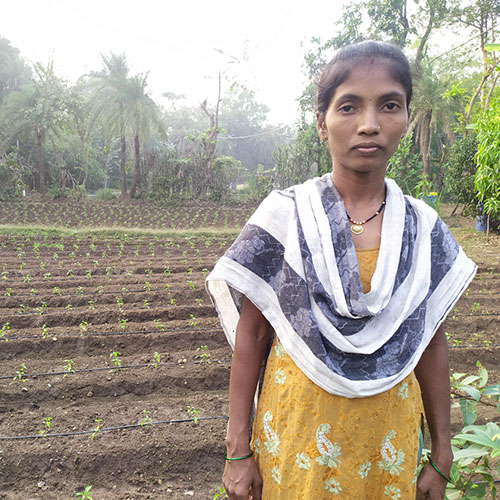
Surekha Thakare, her husband, and two children live in Valaipada, Zari in Maharashtra and are small-time farmers. Surekha had already been a part of the Umeed cadre of the Maharashtra State Rural Livelihood Mission.
View Detail Download PDF

WEAVING HER WAY THROUGH COVID-19 WORRIES

  • KATRI PRAMEELA
  • Maharashtra
  • Uddyam
What happens to artisans whose livelihoods have imploded amid the Covid-19 pandemic? For Katri Prameela, a weaver in Jajapur village of Narayanpet district of Telangana,dealing with the Covid-19....
View Detail Download PDF

BEYOND JUST SKILLS: FINDING RENEWED HOPE AT THE YES CENTRE

  • DURGA GUNDE
  • Nagpur
  • Uddyam
When Durga Gunde walked into the Youth Employability Services (YES) Centre in Nagpur in 2018, it was a last-ditch effort. A migrant to Nagpur from the nearby town of Wardha....
View Detail Download PDF

LEARNING TO BE A: MICRO-ENTERPRISE WHISPERER

  • POONAM
  • Haryana
  • Uddyam
What happens to the many micro-businesses that have suffered during the Covid-19 pandemic lockdown? How do they recover? Poonam is one of the Biz Sakhis (Business Supporters) who are helping solve this quandary....
View Detail Download PDF

FINDING THE WILL: AND THE WAY

  • POONAM
  • Haryana
  • Uddyam
Kamlesh truly embodies the motto of 'when there's a will, there's a way.' The eldest of seven siblings, her childhood in the city of Aligarh, Uttar Pradesh was difcult. Her father was...
View Detail Download PDF

PRIDE IN BEING THE FIRST WOMAN ENTREPRENEUR

  • SAHERA BANU
  • Karnataka
  • Disha
The sweet smell of incense now permeates Sahera Banu's life daily. Her agarbatti (incense sticks) factory is the rst woman-owned business in the village of Sureban, Belgaum distric of Karnataka....
View Detail Download PDF

DISCOVERING THE SWEETNESS OF A CHIKOO ORCHARD

  • YALLAVVA
  • Karnataka
  • Disha
Yallavva Durgappa Bajententhri managed to defy society's orthodox thinking that the life of a widow is over and of no use. She changed life not just for her family but also inspired....
View Detail Download PDF

TAILORING A BRIGHTER FUTURE

  • Gurubayi
  • Karnataka
  • Disha
When given the training and a helping hand, some part-time sewing at home can turn into the emerging village fashion boutique! The colourful cloth store in the narrow lanes of Mannikati village in Belgaum...
View Detail Download PDF

HELPING FORGE A PATH AHEAD FOR STRUGGLING MICRO-ENTERPRISES

  • RAJESH KUMARI
  • Haryana
  • Disha
Perseverance and courage. That's dened Rajesh Kumari's journey and those of the many women she's assisted along the way. Rajesh Kumari is one of the Biz Sakhis...
View Detail Download PDF

HELPING FORGE A PATH AHEAD FOR STRUGGLING MICRO-ENTERPRISES

  • SMITA KADU
  • Maharashtra
  • Uddyam
Who would have thought that chillies would be the ingredient to a sweeter life? For Smita Kadu, that's just what happened. A resident of a small village in Talasari, Palghar...
View Detail Download PDF

Thematic Focus

  • Women’s Economic Empowerment
  • Value Chain Strengthening
  • Employment and Entrepreneurship Promotion
  • Facilitating Convergence and Access to Social Protection and Entitlements
  • Fostering Youth Innovation

Quick Links

  • Home
  • About IG
  • Partners
  • Impact Stories
  • Toolkit and Manuals
  • Publications

Resources

  • Privacy Policy
  • Terms & Conditions

Contact Us

  • 55 Lodhi Estate, New Delhi, Delhi 110003
  • 011 4653 2333
  • info.in@undp.org

© 2021 All Rights Reserved.

SPREADING THE WORD ON NEW FARMING PRACTICES

SUREKHA THAKARE (Maharashtra)

Surekha Thakare, her husband, and two children live in Valaipada, Zari in Maharashtra and are small-time farmers.

Surekha had already been a part of the Umeed cadre of the Maharashtra State Rural Livelihood Mission. She was absorbed into the United Nations Development Programme Uddyam programme as a community resource person and has seen tremendous benets. With a multi-pronged focus on agriculture, the Uddyam project tries to cover agricultural issues from crop techniques to training to marketing.

Cadres of Community Resource Person (CRP) are given training according to seasons. After that, the Community Resource Person (CRP) spread that information to the farmers on the ground, including providing demonstrations.

As farmers, they have learned better ways to grow their crops. Understanding the weather, crop cycle and seasonal rotations have been useful in increasing yield. They are also taught different fertiliser techniques and agri-marketing. They have diversied the types of vegetables they grow. Production has increased and this has led to an increase in earnings.

Surekha has also become the Secretary of the Savitribai Phule Producer Group, one of 42 such producer groups that have been set up in the region. Each producer group has about 15-20 farmers in it.

For women farmers who do not have access to water or other resources, they collectively take farmland on rent and grow vegetables there. This in turn is sold collectively in the markets, thus reducing the burden of rent and leading to better pricing of their crops.

Surekha is also actively involved in the Procurement Centre at Patilpada Zari. The centres are a central hub for farmers to gather and assess their crops. There are about 16 procurement centres around the region that have been set up under the UNDP Uddyam project. They are equipped with weighing machines, rate cards and registers. Daily rates of seasonal vegetables are written on the board. Farmers can bring their vegetables to be weighed and packed in gunny bags with their name and grade of vegetable. Such grading systems for the vegetables are an important element to be able to get a better price at the market.

The centre also helps new farmers know more about efcient farming, procure seeds, and learn from peers. About 50 farmers come to the centre for training purposes every month.

Surekha has been instrumental in identifying farmers to take up these new technologies and practices. Not only has farming improved, but she's gained condence and created an identity of her own as an effective trainer. Surekha says,

By word of mouth, my centre's activities have been spreading in the community and other groups/villages. Community People are keen to know about how they can participate in the Centre's activities and benefit from the programme.

WEAVING HER WAY THROUGH COVID-19 WORRIES

KATRI PRAMEELA (Telangana)

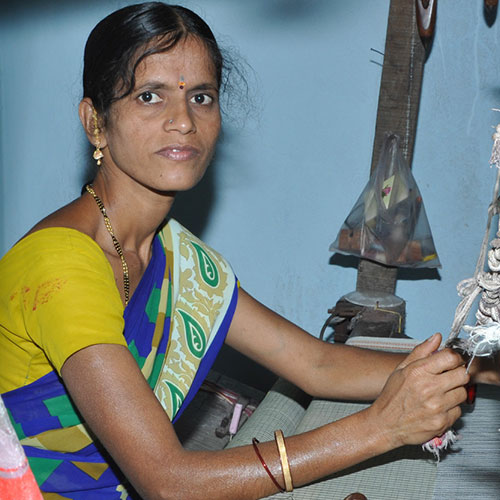
What happens to artisans whose livelihoods have imploded amid the Covid-19 pandemic?

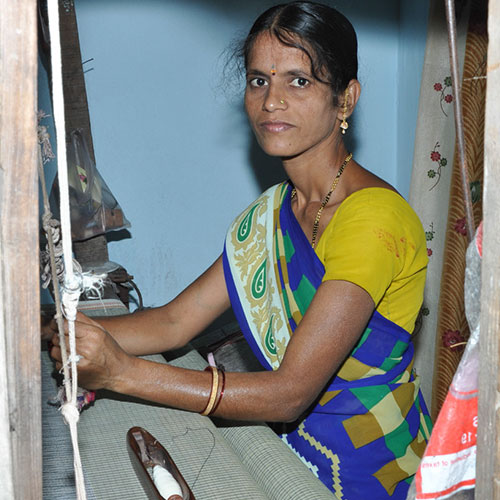
For Katri Prameela, a weaver in Jajapur village of Narayanpet district of Telangana dealing with the Covid-19 pandemic was the pressing reality. Katri became a widow in her late 20s, having lost her husband Vinod in an accident. She supported her son for the last seven years by weaving handloom sarees for a small master weaver. The work would earn her about 4000 per month.

Covid-19 hit the demand badly. The master weaver had no work to pass on as he was himself struggling with piled up stock. For three long months, Katri had no income. She survived with the Government's support of six kilos of rice for a couple of months. "I was so lost and worried as COVID-19 pushed us on the brink of poverty," Katri describes.

Her weaving days began again as part of an initiative jointly run by the United Nations Development Programme (UNDP) and the Government of Telangana and implemented through Abhihaara Social Enterprise. The programme is helping to restore and facilitate alternate livelihoods in Telangana.

Katri was given provisions and underwent skill development training. "The training taught me a new skill of weaving lungis, a rst for the Narayanpet cluster" she says. This was a new product line developed by Abhihaara Social Enterprise. To her respite, she received an order for 50 lungis.

I am hopeful of our future as I have work and am earning a decent sum to run my family" she comments. I am now able to get provisions and milk regularly and can buy books for my child.

Besides, her ability to manage finances was also enhanced through the newly launched Aalambana app, developed to provide skills training and create market linkages and new opportunities for weavers in Telangana.

Katri completed her order in 45 days and was able to sell them directly with Abhihaara's support. This earned her 6,000; she has since received another order.

BEYOND JUST SKILLS: FINDING RENEWED HOPE AT THE YES CENTRE

DURGA GUNDE (Nagpur)

When Durga Gunde walked into the Youth Employability Services (YES) Centre in Nagpur in 2018, it was a last-ditch effort. A migrant to Nagpur from the nearby town of Wardha in Maharashtra, Durga was living alone in hostels, trying to complete her graduation. Her parents worked house cleaning and caretaker jobs when possible, otherwise falling back on subsistence farming.

She was exhausted, having run from pillar to post trying to nd a job. She'd faced severe adversity, even being taken advantage of by employment consultants and supposed well-wishers. So, it was with much scepticism that she took a chance on the YES centre.

What she found instead was a place of hope. The YES centre staff was different, she recalls. There was no requirement, they didn't ask for anything, they just helped.

The Nagpur YES Centre was set up under the direct supervision of United Nations Development Programme – a demonstration of a local level employment marketplace. It was a way to establish direct linkages between youth seeking apprenticeship and job opportunities, and the employers or industry associations. This centre was placed at the employment ofce of Nagpur, in collaboration with the skill department of Nagpur.

With an extensive grassroots awareness and mobilisation component, the centre supported the women through the entire journey until they landed a job. This started with counelling, understanding their aspirations and needs. The women were then put through a work readiness module, including basic

computer skills, communication, interview etiquette and practice. Finally, they were linked with local employers. Though a standard comprehensive module, the staff were also cooperative when students like Durga had to adjust their hours to meet their current commitments.

Durga's batch had about 20 young women, most of whom were also the rst girls in their family to step out and seek paid employment. They may have been learning skills from a job perspective, but, as Durga discovered, these were useful in everyday life as well!

For us coming from the villages," says Durga, "there are a lot of little things we don't know. When we go to interviews, what kind of language to use, how to introduce ourselves, how to look professional. As they say, first impressions are last impressions. But for us, that was often negative.

The training served her well. Her most memorable moment was when she landed a job with Future Supply Chain. It wasn't just about getting the job, but the self-condence that came with acing the interview, honourably. "That positivity is something that will stay with me even in future interviews," she reminisces. Unfortunately, she lost her job at Future Supply Chain in the wake of Covid-19. However, she did manage to get another job working security, which is currently paying the bills.

Her connections with the UNDP staff she met at YES Centre have endured and she still turns to them for advice. She has also recognised the value that the Centre has brought to her life.

"I've referred a lot of girls to YES centre. For those coming from the village, the need for a job is acute. There are a lot of people like me who get tired of just giving money to these agencies where nothing happens. I tell them, try YES centre. There's trust. There's quality.

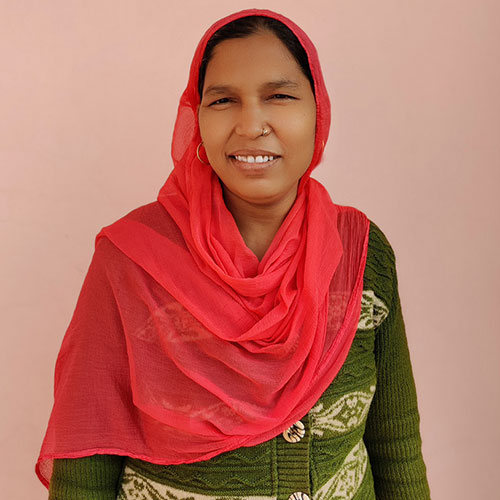
LEARNING TO BE A: MICRO-ENTERPRISE WHISPERER

POONAM (Haryana)

What happens to the many micro-businesses that have suffered during the Covid-19 pandemic lockdown? How do they recover?

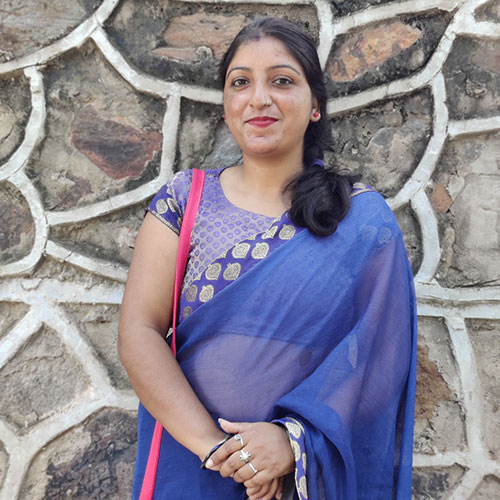
Poonam is one of the Biz Sakhis (Business Supporters) who are helping solve this quandary.

Married at the age of 18, Poonam is a mother to two daughters. Her professional journey began in November 2015 when she became a bank Mitra (a programme under the Haryana State Rural Livelihood Mission).

In our families and community, it is very hard for women to move out," she says. She faced difficulty initially, but her in-laws supported her. Things slowly improved. "We are from a middle-class family," she says, "so a little money coming in and some progress happening is also encouraging for the family

In 2016, she interviewed for and joined the Start-up Village Programme (SVP). Her work under the SVP has contributed to establishing hundreds of small enterprises from grocery shops to cosmetics to sweet shops. There was even a farmer who established a tube well in his farm and was using it to provide water service to other farm. The programme gave enterprises handholding for 12 months, but tailored it to the ability of the (often illiterate) entrepreneur

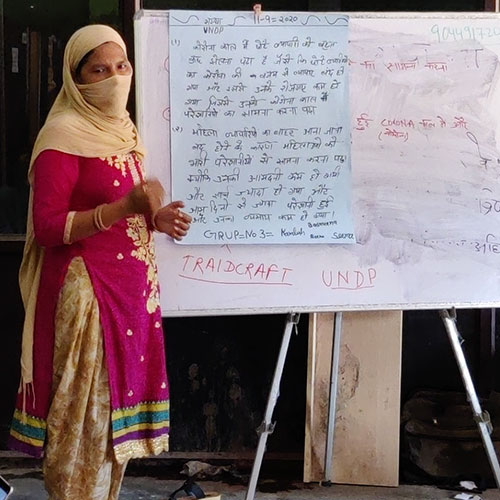
Poonam is now using all of this experience as a Biz Sakhi, a United Nations Development Programme that is building resilience and facilitating the restoration of livelihoods among rural micro-entrepreneurs to combat Covid-19. The programme running between July and December 2020 is helping re-establish 200 microenterprises. "As a Biz Sakhi, we are working more on identifying the businesses that have got shut down," Poonam comments, "how do we get them started again?"

Her training under the Start-up Village Programme and now by Traidcraft (the local NGO implementing the programme) has helped enormously, but Poonam displays an inherent understanding of the softer psychosocial components of speaking to a micro-entrepreneur.

"You meet those broken by Covid-19 who think my livelihood cannot succeed now. How do you get them out of that feeling of dejection? They might not be able to say this to anyone, even to people in their own household. But we need to get them comfortable enough to share these things with us. We sit and speak with them informally, and this usually has more effect."

A set of objective selection criteria helped each Biz Sakhi identify 30 entrepreneurs for training. The programme also used innovative means to conduct these trainings in times of social distancing. It happened through 25 radio episodes (two a week). Each Biz Sakhi then further narrowed down to 6-7 entrepreneurs with whom they engage more deeply, acting as a bridge to facilitate resources and ensure the link to markets.

If we can be of help to someone,"Poonam concludes "that is the biggest thing. Now, it's like second nature and I cannot leave this field. Or maybe you can say that this field doesn't want to leave me.

FINDING THE WILL: AND THE WAY

KAMLESH (Uttar Pradesh)

Kamlesh truly embodies the motto of 'when there's a will, there's a way.'

The eldest of seven siblings, her childhood in the city of Aligarh, Uttar Pradesh was difcult. Her father was a daily wage worker and resources were scarce. Kamlesh was married at the age of 18 and moved to Pinangwan town in Nuh district of Haryana with her in-laws. Within seven years, Kamlesh became a mother to three daughters and two sons. In the year 2011, after her husband passed away, she was asked to leave the house and live separately. She was not allowed to take her two sons along with her.

With no nancial recourse, Kamlesh began looking for work. She found a position as a teaching assistant in one of Pinangwan's Madrasas (educational institutes). She rented a room for herself and her daughters, making ends meet with her meagre earnings.

Life then threw another shock at her. Her sister Sima, married into the same family, was deserted by her husband. She too was thrown out with just her three daughters and came to live with Kamlesh. It was more than a struggle to support all eight of them with Kamlesh's sole income.

Her meeting with Naseer, the Block Cluster Coordinator from the Haryana State Rural Livelihood Mission in 2018 was the turning point. She was encouraged to join a Self-Help Group and began receiving a lot of support from her fellow members.

"If we work hard, our progress is inevitable," she says. Indeed, within a year and a half, Kamlesh's dedication had shown results and she was made a Community Resource Person. She now has an average monthly income of 15,000 and has bought a small plot where she plans to build a house. From a social perspective, she has made a name for herself and receives a lot of respect from others for her work; despite the initial trouble she faced at the behest of her in-laws. She has also motivated Sima to join her on this journey and become nancially self-sufcient.

Having learned tough life lessons, her condence has grown. "I am more comfortable now financially," Kamlesh says. "All my three girls are studying. I want to make them financially independent. They should not have to beg for their living."

Kamlesh is now using all of her experience as a Biz Sakhi (Business Supporter), a United Nations Development Programme (UNDP) initiative building resilience and facilitating the restoration of livelihoods among rural micro-entrepreneurs to combat Covid-19. Since women like Kamlesh already have deep connections and trust built up in their villages, the programme works through Haryana State Rural Livelihood Mission(HSRLM) and them.

For Kamlesh, she feels this is an opportunity to further her life goal - supporting other women like her to nd their path to progress.

PRIDE IN BEING THE FIRST WOMAN ENTREPRENEUR

SAHERA BANU (Karnataka)

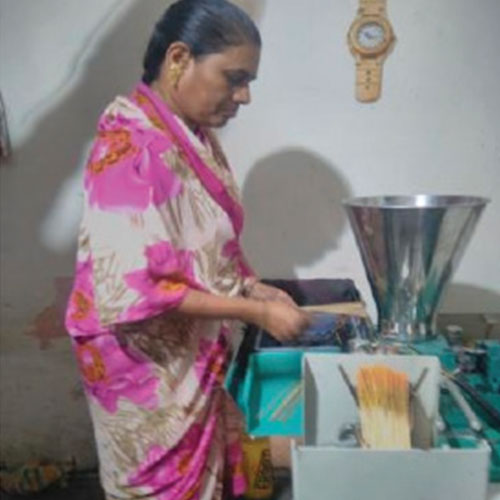
The sweet smell of incense now permeates Sahera Banu's life daily. Her agarbatti (incense sticks) factory is the rst woman-owned business in the village of Sureban, Belgaum district of Karnataka.

Sahera's life is changed since she has opened her production unit. Like many other middle-aged women in her community, Sahera wasn't able to get much of an education. She was a young widow, having her husband, a soldier in the Indian army, passed away just three years after their marriage. The responsibility of taking care of her family fell to her.

She turned to make vibhuti, sacred ash used in Hindu rituals. It is made from the white ash of wood burnt in the sacred re. This ash is used to draw three lines on the forehead of the devotee. The vibhuti production would earn her 400-500 a day just enough to make ends meet.

The micro-entrepreneur in her found another avenue when she learned about the Disha project – an initiative under the United Nations Development Programme (UNDP) that aims to improve the lives of underprivileged women and girls and enable them to acquire marketable skills and avail employment and entrepreneurial opportunities.

Under the project Disha implemented by Future Greens Samsthe in rural Karnataka, women cadres identied from specic villages are trained on nancial and entrepreneurial management of micro-enterprises. These cadres, in turn, conduct orientation sessions for women micro-entrepreneurs, equipping them to start their businesses and leverage the resources available to them.

Sahera immediately capitalised on this opportunity. The orientation session helped expand her understanding of microenterprise management, how to tap into local markets, and the procurement of raw materials. Soon afterward, in November 2017, Sahera enrolled in a workshop on the making of incense sticks and camphor. It proved to be a turning point in her life.

" Such technical training under Project Disha and the provision of financial support is enabling rural women to fulfill their dreams," Sahera says.

Collectively, with 14 others in her self-help group, they were able to secure a loan of 5,00,000 from ICICI bank. Out of this, she and her daughter-in-law received 1,00,000, and adding their savings, they invested in an Agarbatti machine.

Sahera now runs an incense stick production facility in her village and earns 2,500 a day; a gure tha almost doubles during festivals. She's also improved her working conditions. Earlier, she would prepare the raw material with bare hands, not knowing where to procure it. Now, she buys her raw material from Hubli and sells the nished product through her nephew, who owns a retail shop in Bagalkot (a town nearby).

Sahera's next goal is to set up a camphor production facility with others in her village.

Even as she has begun to live her dreams, the self-made Sahera is still known for her enthusiasm and willingness to help others. People in her village seek her advice on nancial matters. Even the banks in the locality approach her, both for giving out loans and recovering them.

As she comments, "Most women in my village work on agricultural fields, and entrepreneurship remains a taboo. I am willing to help anyone who wants to become an entrepreneur

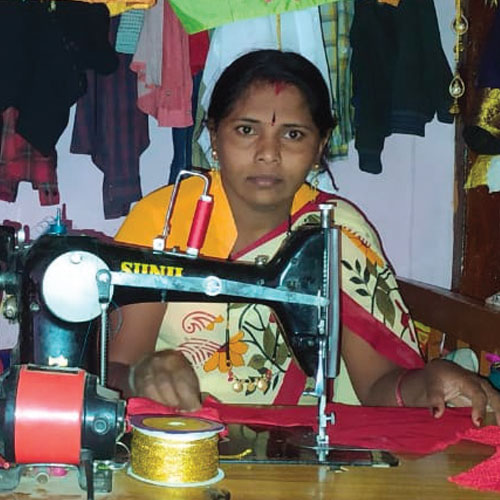
DISCOVERING THE SWEETNESS OF A CHIKOO ORCHARD

YALLAVVA (Karnataka)

Yallavva Durgappa Bajententhri managed to defy society's orthodox thinking that the life of a widow is over and of no use. She changed life not just for her family but also inspired other women in her village.

Yallavva is a resident of Kaladagi, a tiny rural village in Bagalkot district of Karnataka. Widowed in her mid-40s, she had no choice but to take on the role of breadwinner – a nancial role reserved mainly for men in her patriarchal Bajantri community. She began knitting handicrafts and selling broomsticks to support daily expenses and her son's education. They barely made ends meet.

Her formal introduction to the idea of micro-entrepreneurship turned towards nancial sustainability into a giant leap. She was invited for the session by women cadres in her village who had been trained by Future Greens Samsthe under the Disha project – an initiative by the United Nations Development Programme (UNDP). These women are usually members of the existing self-help groups, who are eager to foster development within their villages. They provide relevant knowledge required to start their own business and support the use of available resources through Future Greens Samsthe and Disha.

The orientation taught her the basics of local lucrative and popular businesses, marketing strategies, negotiation skills, and ways to increase her income.

Intrigued, she enrolled for a 3-day workshop on seeding, cultivation of orchards, and harvesting techniques held at the University of Horticultural Sciences, Bagalkot.

Armed with some theory, the question was where to begin? The cadres and Future Greens were there to support her, helping her take a loan of 50,000 from ICICI bank. She added the 20,000 from her savings and invested in leasing out a Chikoo orchard in her village.

Harvest of just half the produce yielded 50,000 that Yallavva invested in the additional lease of a tamarind orchard. Her income has now more than doubled. Additionally, it's been socially empowering. "I now own the orchards where my parents worked as labourers," Yallavva says proudly. She now plans to set up a juice centre along with ten other women in her village.

Her story is becoming more an inspiration and less of an exception in Kaladagi! An increasing number of women are breaking traditional barriers and turning to entrepreneurship to support their families.

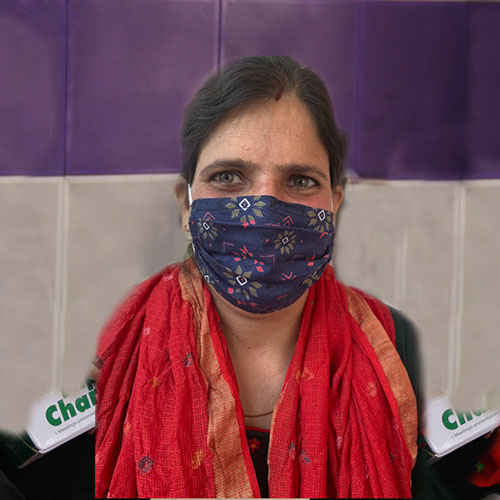
TAILORING A BRIGHTER FUTURE

GURUBAYI (Karnataka)

When given the training and a helping hand, some part-time sewing at home can turn into the emerging village fashion boutique!

The colourful cloth store in the narrow lanes of Mannikati village in Belgaum, Karnataka is the centre of Gurubayi Muthappa Girisagar's dreams.

A wife and mother of two, Gurubayi's family have been scrapping by to meet daily needs. They survived with no stable income, depending on tailoring she did from home earning just Rs. 120-150 a day and her husband's sporadic jobs as an electrician. There was also no family support, having lost both her parents-in-law years ago.

Then one day Gurubayi attended an orientation session for women micro-entrepreneurs and it opened her eyes to new possibilities. The session was led by the women cadres trained under Project Disha – an initiative by the United Nations Development Programme (UNDP) and implemented by Future Green Samsthe in Karnataka. These are women community leaders who have gone through 'Train the Trainer' programmes on micro-enterprise management and capacity building.

For Gurubayi, the session was inspirational. It provided insights on many aspects of a micro-enterprise; benefits of joining a self-help group; how and where to procure raw material; and which businesses are locally more popular and lucrative.

Immediately, she enrolled for a 3-day workshop on textile design held by Future Greens Samsthe. It was here that she learned about different varieties of indigenous cloth designs and methods. With the programme's help, she secured a Rs. 50,000 loan from ICICI bank and set up a small clothing store in her village.

Armed with some theory, the question was where to begin? The cadres and Future Greens were there to support her, helping her take a loan of Rs. 50,000 from ICICI bank. She added the Rs. 20,000 from her savings and invested in leasing out a Chikoo orchard in her village.

Women in villages often have to travel to nearby cities to find work. With the help of programmes like Disha, we don't have to do that anymore; we can work in our village and support our family", says Gurubayi exuberantly.

Today, Gurubayi sells women's and children's clothes worth Rs. 1,000-1,500 on a daily, making an average profit of 300 a day. It increases substantially during festivals. Gurubayi is also planning to turn into a designer by investing in an embroidery machine and making her designs. Besides, she wants to expand to men's clothing and diversify in setting up a roti and papad business alongside tailoring.

Not only has this intervention helped her understand the opportunities available, she says, but also her potential. It has sparked the hope of a better life.

HELPING FORGE A PATH AHEAD FOR STRUGGLING MICRO-ENTERPRISES

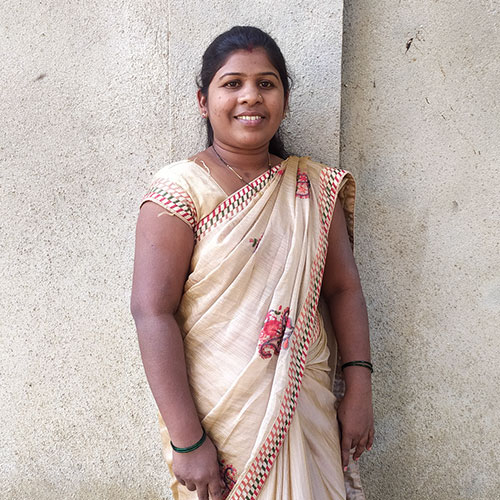
RAJESH KUMARI (Haryana)

Perseverance and courage. That's dened Rajesh Kumari's journey and those of the many women she's assisted along the way.

Rajesh Kumari is one of the Biz Sakhis (Business Supporters) in her village of Pataudi block, Haryana. A new programme initiated by United Nations Development Programme in the times of Covid-19, Biz Sakhis are helping identify and counsel micro-enterprises that have suffered during the lockdown. Rajesh Kumari was chosen as the Biz Sakhi from her village of Fazalpur Badli and has been part of the programme since September 2020.

Once we got the training, we went back to our village and gathered the women in our groups," she says. "We asked them about their experiences. They would tell us about their losses and ask, how do we recover from this?

Biz Sakhis like Rajesh Kumari were chosen from cadres of women already formed under the Haryana State Rural Livelihood Mission / National Rural Livelihood Mission. Mobilised since 2014, the women form Self-Help Groups and start livelihood activities. They have already established trust and deep connections in their villages. So instead of training new people, UNDP connected with them, working through the local NGO Traidcraft.

The programme, running from July to December 2020 in Mewat and Pataudi in Haryana aims to sensitise 2500 individuals, train 1000, and re-establish 200 microenterprises.

The youngest of seven children, Rajesh Kumari was (unusually) allowed to study up to 11th standard. Married at the age of 15, she became a mother to two sons early in life. Once they were in high school, she wanted to nd a way to contribute to the household.

For the past four years, she has been rst a Village Facilitator and then a Community Resource Person with the National Rural Livelihood Mission. She's even used her tailoring skills to coordinate a Sewing Centre run by an NGO (Bansuri Foundation).

It is difficult when women are not allowed to go out of the house, when even husbands and in-laws don't allow it. It is hard for women to gather up the courage," she says. "It was the same for me. At first my husband would tell me, don't go here, don't go there.

Rajesh Kumari has brought the same perseverance to helping other women.

One instance stays in her memory – a woman named Renu who she met when posted in Gurgaon. Renu has four daughters and a son. Although her husband drove an auto, he drank away his earnings and she was trying to educate her daughters through the government school. Rajesh Kumari tried to get Renu into the Village Facilitator programme. It was very challenging, but she persevered through several attempts. Today, she has climbed the ranks to become a Community Resource Person. Her eldest daughter has become a Village Facilitator. With both salaries coming into the household, the women have gained strength. It's also slowly changed the husband's attitude – he now even offers to drive them to the other villages where they need to go!

For the many micro-enterprises that have had to shut their doors during the lockdown, Rajesh Kumari is hopeful that the Biz Sakhi programme will help them succeed in the same way.

FINDING THE POWER OF CHILLIES

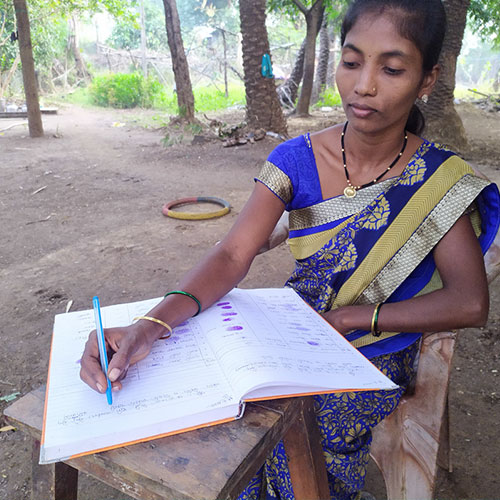
SMITA KADU (Maharashtra)

Who would have thought that chillies would be the ingredient to a sweeter life? For Smita Kadu, that's just what happened.

A resident of a small village in Talasari, Palghar district of Maharashtra; Smita lives with her husband, mother-in-law, brother-in-law and two children. Their livelihood comes from small-scale farming, and there were years where they had tried planting eggplant and tomato. Their earnings were minimal, however, due to the quality. There was even a time where a kilo of eggplant fetched them just two rupees.

Smita had seen Uddyam staff in action when they came for visits to her area, and slowly got involved.

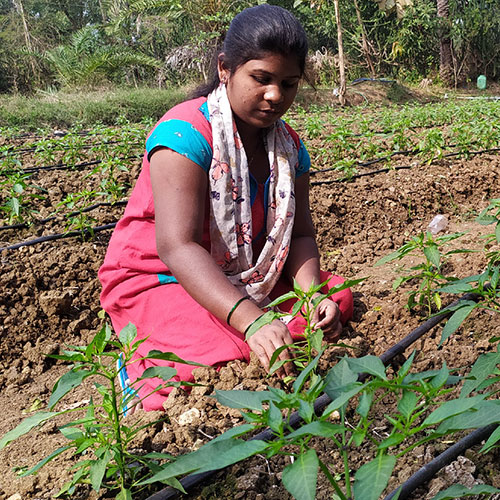
The Uddyam project, supported by United Nations Development Programme and run by Catalyst Management Services in the Talasari region, focuses on agriculture. It looks at training, agricultural extensions, and agri-marketing. Crop diversication, one of the main aims of the project, introduced chillies, watermelon, and marigolds. These were crops that were affordable, sustainable and replicable in the local environment, while still helping to diversify from a pure paddy focus.

For Smita, it was chillies that have helped carve a new path.

The scope to grow chillies improved with the new techniques that they've learnt in the training. The seedling tray technique in particular has helped her to increase yield. The seeds are planted in trays (approximately 18 trays per packet of seeds). These are kept covered for about a week until the rst buds start to show. They are then kept in a green net, which Smita has learned to make at home.

For her, the difference has been noticeable. Unlike the bed technique, where seedlings are of different sizes or don't ower at all, the tray technique sees every seed ower.

For the rst year, she simply planted and sold for herself, but this year she has got an order for 10,000 seedlings from other families! They harvest 2-3 times a week and have almost doubled their income.

The nearest markets are 20 kilometres away. Earlier, there used to be people who took vegetables by themselves to the market. Now they take them in groups of 6-7 people, splitting travel costs and saving on money. A lot of people are seeing these advantages.

"Now I don't have to go anywhere for vegetables. It feels like my own business. You can earn on your own, don't have to take anyone else's orders. Even our returns at the market are better."

In fact, chillies have had the best rate in Talasari in all of Maharashtra in the last season. Third party buyers have even been exporting them.

Smita feels that the benets have gone beyond the nancial and has social implications. There is still a culture in her village of telling women to not go here and there; to stay at home. Yet Smita's family has been very supportive. She gives them the credit for being able to pursue this further.

She thinks more women should join the project Uddyam. "Until the time we are able to step out, "she says, "we will not get to know things."

If I hadn't become a Resource Person, I would't even be able to speak anything. Before that, I wouldn't go out of the house much. I was uncomfortable dealing with others. Whatever I am able to communicate today, it is because of the training. Despite my lack of education, I can do so many things now